

Seven Ways to Die Quotes

46 ratings, 3.43 average rating, 16 reviews
buy a copy
Seven Ways to Die Quotes
“Listen. The past will become the present and the future will
unfold before your eyes. Sometimes when you are alone it is okay to
think about what has gone before. In your life, I mean. To understand
why the past has become the present. Sometimes it is okay to think about
where the trail will lead you, and why you are following it at all.”

Kansas City Star Mentions Seven Ways To Die
LAST DIEHL
By BRIAN BURNES
William Diehl, the Georgia author
of several mysteries, among them “Sharky’s Machine” and “Primal Fear,” died in
2006. He left about 400 manuscript pages of a final mystery, along with
detailed notes.
With the blessing of his
widow, Virginia Gunn Diehl, a film producer named Michael A. Simpson gave the
manuscript to friend Ken Atchity, a former Kansas Citian who is also an author
and film producer.
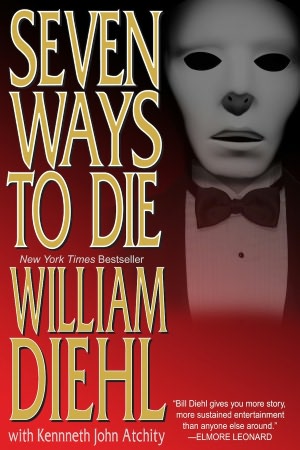
The book, “Seven Ways to Die,”
now has been published. It was based in part on a coroner’s handbook given to
Diehl by an Illinois
medical examiner.
“I went into it in a kind of
forensic way, seeing what was there and the outline Bill had done,” said
Atchity, who grew up in part in Kansas City and
graduated from Rockhurst
High School.
“I spent two years putting
this jigsaw puzzle together, reading Bill’s work over and over again.”
The response from Diehl’s
fans has been gratifying, Atchity said. “A lot of them think it is really
Bill’s work,” he said.
For more about Atchity, go to kenatchity.blogspot.com.
To reach Brian Burnes, call 816-234-4120 or send email to bburnes@kcstar.com.
To reach Brian Burnes, call 816-234-4120 or send email to bburnes@kcstar.com.
Awesome Review Of Seven Ways to Die!

What if you could communicate and understand the voices and sounds of animals? What if those voices and sounds could keep you safe and help you understand your environment? Animals can teach humans so many things if we really pay close attention. Love is something we all want and animals when treated with kindness and caring love us unconditionally. Some animals help us to heal and others teach us about ourselves, each other and the world we live in. It takes time to learn this skill and develop this trust in order to communicate with animals. Right of passage is often part of the Native American culture. Young boys before becoming part of the tribe and men have to endure a survival test. One young boy and an older man enter the woods on horseback so that the child can begin his journey into manhood. With only the bare essentials that they allow, knowing how to survive on his own this young man and the older man venture to a campsite, each their final meal together and at dawn’s light the man is gone and the young boy is now on his own. Smart, alert and knowledgeable, the young boy moves further on and comes face to face with many obstacles. Killing a rabbit for his dinner he never sees the rattler that was about to attack him. Staying focused and centered he deals with the venom and the wound hopefully removing all of the poison before it enters his bloodstream. With his grandmother’s red ointment as a salve to prevent infection he cleans the wound and then something miraculous happens. While asleep as wolf removes the tourniquet on his wound and cleans it in its own special way. Could this wolf be a special gift from God to help guide him through? Now at the end of his journey he would become a man. Let’s meet this young man-years later: Micah Cody our main character.
Serial killers target many people for different reasons. Melinda was a beautiful young dancer who never made it into the company of any ballet. Wanting to make a living she entered an entirely different and more dangerous world of dancing. Before leaving work she finds a card with a number on it. Asking the bartender if he knew where it came from lead nowhere. Entering her apartment was the last thing she would ever do. The killer was waiting for her.
Raymond Hanley was a young stockbroker engaged to his boss’s daughter. Entering the apartment the maid finds a horrific sight. Both victims Melinda and Raymond, although the murders were two years apart were made to look like suicides. Where they? Enter Micah Cody and his special Tactical Assistance Squad, which he created for one purpose to capture serial killers. What is unique about this squad is their ability to step into an investigation at any point and take it over. Each member of the team handpicked by the Micah to work the murders and hopefully solve these cold cases. His team consists of Lieutenant Frank Rizzo, Detective Calvin Bergman and the forensic pathologist Max Wolfsheim. But, not everyone wants them to solve their cases and one man is determined to bring them down and prove that he has what it takes to solve these murders. Crime reporter Ward Hamilton has written many well-documented novels but needs another winner to get back on top. Two failures did not endear him editor of the magazine he writes for. Jake Sallinger had him over a barrel and now he had to pitch and idea that would give him the advantage he needed to get control of his career and bring this unit down.
As we flash forward to the crime scene the author allows the reader to enter the apartment of the deceased and takes everyone including the detectives and Micah on an inside tour of the apartment, the investigative process and the procedures followed along with questioning the witnesses. Neighbor questioned and the maid sent home there is much more that needs to be addressed as the victim’s black book contains a lot of information and Black Halloween Mask was found. But, there is much more as our star reporter was given the deadline of Halloween for his first article in the series he wants to right dealing with this unit.
Bringing his team together in their unique surroundings the reader meets all of the members and gets to know what their specialties are and the author introduces more information about the murder. One black book had all of his vital information plus receipts with his expenditures except for the one for the taxi that took him home. But, there was a vital piece missing and before they could piece it all together the team needed to know where his computer, blackberry and cell phone were, find the missing receipt from the taxi company and learn where he stopped before going home. Raymond Hanley had several meetings before returning home and one might have gotten him killed as the author reveals more about his man’s life than his future wife would like to know.
Kate Winters has just joined their team as their ADA in order to keep them on the right course during an investigation. Meeting the team and entering the investigation she learns more about the case, the victim’s lifestyle and the possible reasons he might have been killed. This self-made man was into more than most women would want their fiancés to be into and there has to be linked to his other activities that got him killed. As the autopsy was completed what is related is that the victim knew his killer, submitted too much of what happened and the bondage involved and the end result still remains to be figured out.
The crime scene was devoid of blood and the reason why you will learn as you listen to Max’s detailed account of the autopsy and his findings. Approaching Raymond’s boss brings up other questions as to why he handled the information in such a clinical manner and did not seem to really focus on who might have killed him, how or why. So, what is the interest of this reporter as he renters the action and enlists the help of his editor to ask the police for some assistance in getting the files of the cold case he is writing about. The link between Melinda’s death two years before and the present one just might come to light.
The research alone is quite extensive in this book taking us into life of a young man from the Nez Perce Indian Reservation to his present life as the head of the Tactical Assistance Force. Added into the plot that keeps it moving is the research into police investigations, how an autopsy is handled and how a proper investigation is run. Why would someone go to a sex club and go to the trouble of handing your partner a key to your front door and apartment unless the killer or other person gave the key to someone else? Who wanted to eliminate Raymond Handley that they went to so much trouble to create a crime scene cleaner than most homes after a service comes? When Handley’s next-door neighbor takes an interest in Cody why does he come to her aide? When he introduces her to a friend she learns about his unique ability to communicate with animals as she observes him with the two wolves that he rescued and a friend who took care of their wounds. There is much more as we learn more about Amelie, Bergman and his quest for answers using the black book and Louis Nevins his friend and business associate. Why are the wolves howling and how will this link together? Characters that are vividly described, devoted to their craft and would make any police department proud to have on their team.
Micah and his team were relentless in following each clue and trying to prevent more deaths but the killer seemed to be ahead of TAZ and from Melinda whose death two years before you will learn was related to one of the deaths in the present led the killer to get six more victims. Seven unique ways to die and just why each victim was chosen you won’t believe. But, when Micah is in danger and the killer is upon him and the mode of death inflicted will he be able to remain calm and use his knowledge of the past, his childhood experiences and the words of the Old Man to save himself or will he be number 7 as the killer planned? How this all ties together and just why all the murders occurred you have to learn for yourself? Seven Ways to Die: All painful and each unique in its execution. Who was behind the plot to try and bring Micah down? Why wanted him gone? Author William Diehl’s last novel is definitely a testimony to his outstanding writing, fast paced plot with intricate twists, turns, surprises and an ending that you won’t expect or see coming. With the outstanding support of Virginia Gunn Diehl who provided the manuscript and author Kenneth John Archity his final story came to life for everyone to read. Do you hear the wolves?
Thank you for giving me the honor of reviewing this book.
Let’s give this book: FIVE HOWLS
Fran Lewis: reviewer
Diehling for Dollars
Bill Diehl caught the proverbial brass ring, but it was with a last-minute lunge: As he and his agents were talking on the phone about which of two offers to accept from publishing companies for his first book, the phone company cut off his service for non-payment.
"I had to walk about a half-mile to a phone booth to finish the negotiations."
From that phone booth, Diehl negotiated a $1 million deal with the Dell publishing company.


"I had to walk about a half-mile to a phone booth to finish the negotiations."
From that phone booth, Diehl negotiated a $1 million deal with the Dell publishing company.

Sharky's Machine
by William Diehl
by William Diehl
Atlanta narc cop stumbles across a mob murder with government ties.
Britain's First Serial Killer: New Artist Impression Of Mary Ann Cotton
Known as the Black Widow, North East born Cotton is suspected of killing up to 21 people mainly by arsenic poisoning in the 19th Century.
Subscribe to:
Posts (Atom)